What if breakfast could be simpler, heartier, and a little closer to the way whole grains were meant to be eaten?
This Hearty 4-Grain Cereal combines hulled barley, Kamut® berries, spelt berries, and whole oat groats into one warm, satisfying breakfast. Instead of instant oats or heavily processed breakfast cereals, it starts with intact whole grains and lets the slow cooker do most of the work overnight.
The recipe comes from a lifestyle program associated with Dr. John Kelly, a physician who has spent decades studying and teaching the role that everyday habits—particularly nutrition—can play in health.
As Dr. Kelly has said:
“Science has discovered that what we eat exerts the strongest influence on our gene expression, next to exercise.”
That idea sits at the heart of lifestyle medicine: our genes matter, but so do the choices and environments that influence how our bodies function over time.
And sometimes putting that philosophy into practice can begin with something as ordinary as breakfast.
hearty 4-grain cereal recipe
The beauty of this recipe is not simply that it contains four grains. It uses whole or minimally processed forms of those grains, giving the cereal a completely different texture from conventional boxed breakfast cereal.
Each grain brings something slightly different to the bowl.
This cereal is wonderfully simple. The grains cook slowly overnight until tender and chewy, leaving you with a warm breakfast ready to customize in the morning.
Ingredients
- ½ cup organic hulled barley
- ½ cup organic Kamut® berries
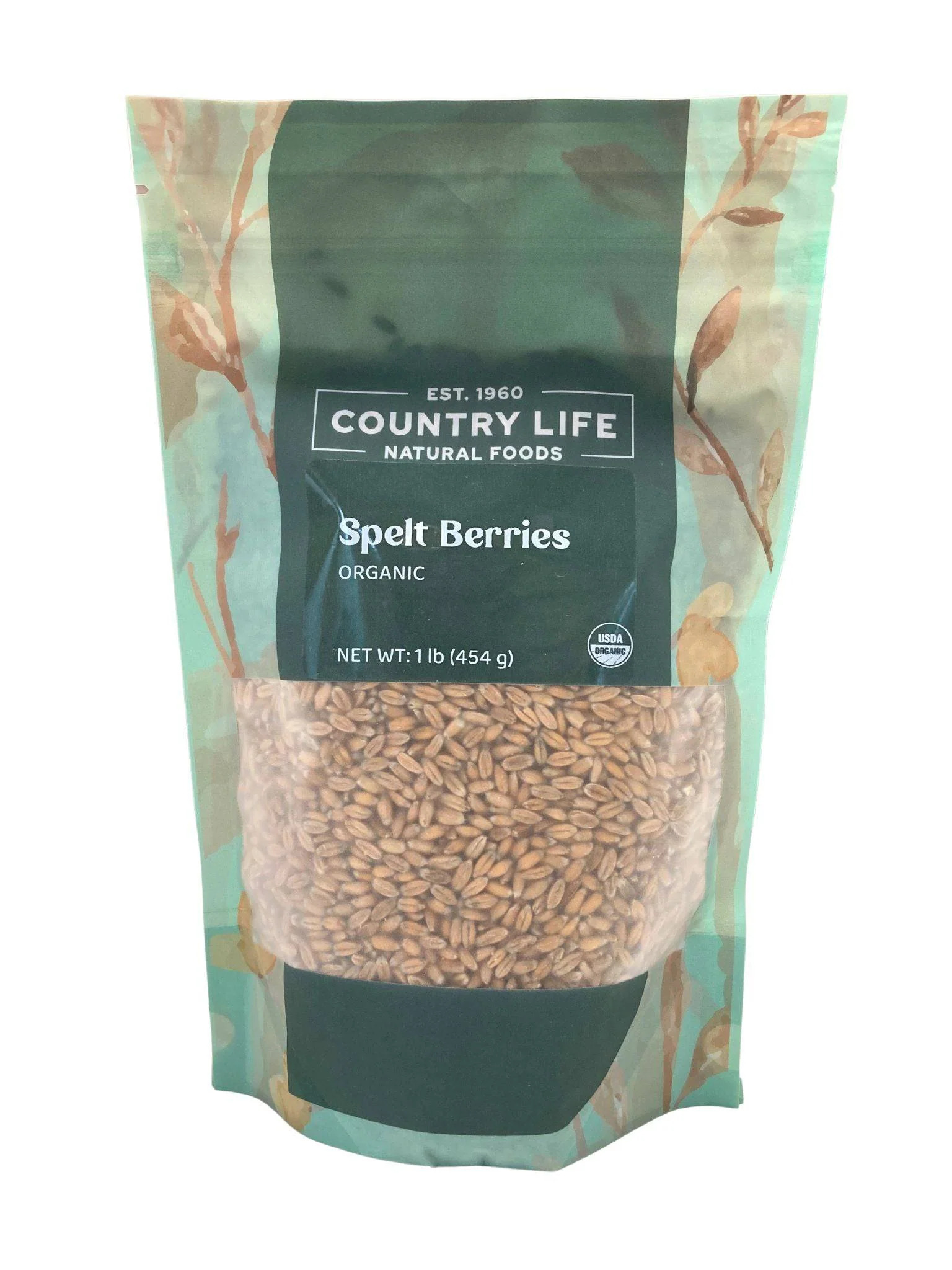
- ½ cup organic spelt berries
- ½ cup organic whole oat groats
- 6 cups water
- ½ teaspoon sea salt
Method
- Rinse the barley, Kamut® berries, spelt berries, and oat groats thoroughly under cool running water.
- Add the rinsed grains to a slow cooker.
- Pour in 6 cups of water and add the sea salt.
- Cover and cook on low for approximately 7–8 hours, or overnight, until the grains are tender.
- Stir before serving and add a little extra plant milk if you prefer a looser, creamier cereal.
Serve warm with your favorite toppings.
Try:
- Fresh berries, peaches, apples, or bananas
- Chopped dates, raisins, or other dried fruit
- Walnuts, pecans, or almonds
- Chia, flax, hemp, pumpkin, or sunflower seeds
- Peanut, almond, or another nut or seed butter
- Unsweetened plant milk
- Cinnamon or other warming spices
- A small drizzle of maple syrup or another natural sweetener, if desired
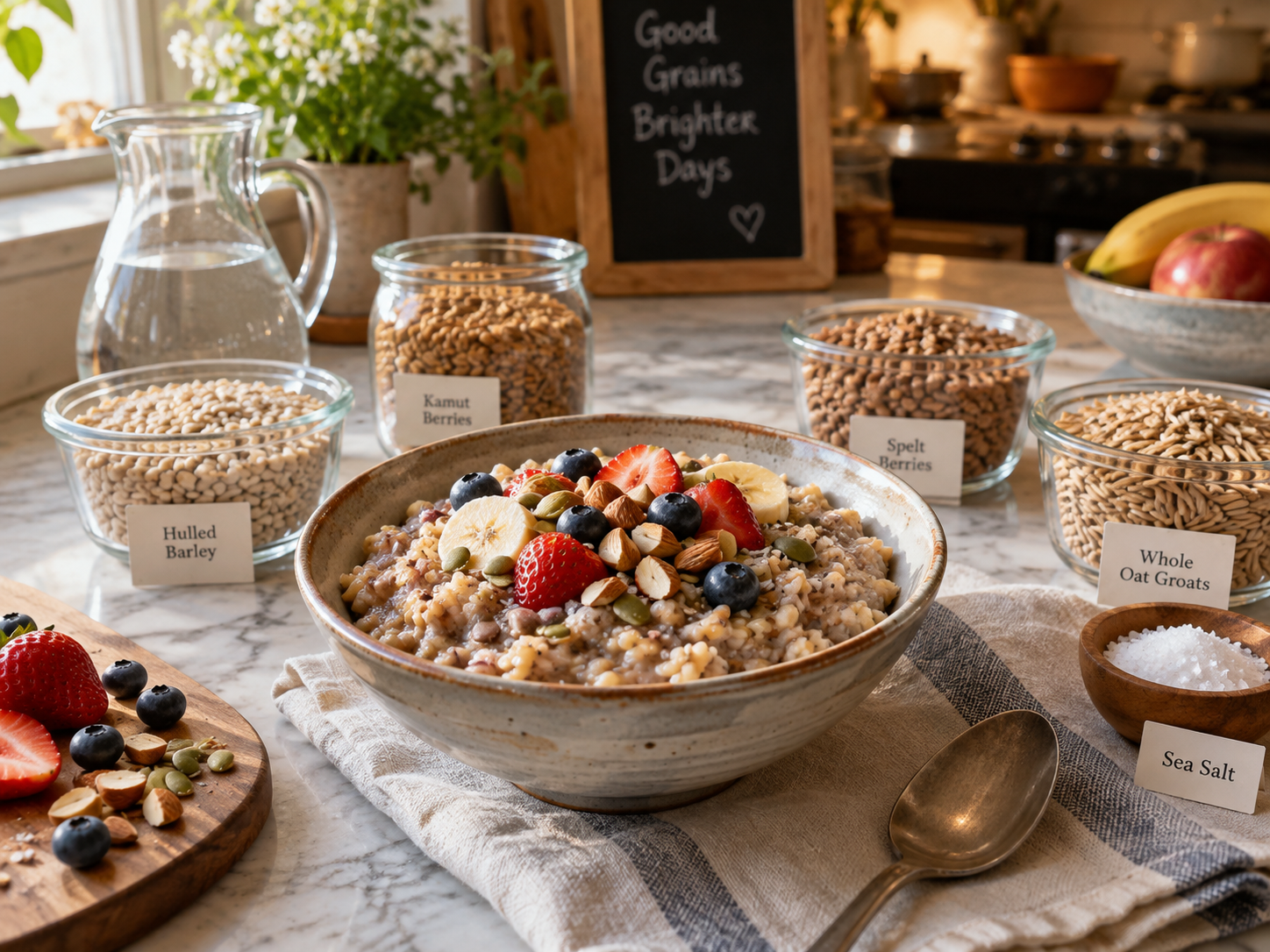
Ways to Make Your 4-Grain Cereal Different Every Morning
The grain base may stay the same, but the toppings can change completely.
Apple Cinnamon
Top with chopped apple, walnuts, cinnamon, flaxseed, and plant milk.
Berry Almond
Add blueberries, raspberries, almond butter, chia seeds, and unsweetened almond milk.
Banana Peanut Butter
Try sliced banana, peanut butter, hemp seeds, cinnamon, and a small drizzle of maple syrup.
Peach Pecan
Add fresh or thawed peaches, chopped pecans, cinnamon, and oat milk.
Date & Walnut
Top with chopped dates, walnuts, ground flaxseed, and warm plant milk for natural sweetness.
This is also an easy place to follow one of the simplest principles of plant-forward eating: add more plants.
One bowl might contain four grains, berries, walnuts, flaxseed, cinnamon, and soy milk—a surprising amount of plant variety before the day has really begun.
A Bigger Idea About Health

A bowl of cereal cannot determine your health on its own, of course.
That is actually part of what makes lifestyle medicine interesting: it looks beyond individual “superfoods” and focuses on patterns of living repeated over time.
Lifestyle medicine is an evidence-based medical specialty that uses therapeutic lifestyle interventions to help prevent, manage, and in some circumstances treat or place certain chronic diseases into remission.
Rather than viewing nutrition, exercise, sleep, or stress as afterthoughts, lifestyle medicine makes these behaviors a central part of care.
Modern lifestyle medicine generally focuses on six interconnected areas:
- Whole-food, plant-predominant nutrition
- Regular physical activity
- Restorative sleep
- Stress management
- Positive social connection
- Avoidance of risky substances
Nutrition is therefore one piece of a much larger picture.
The American College of Lifestyle Medicine encourages dietary patterns centered around a variety of minimally processed plant foods, including vegetables, fruits, whole grains, legumes, nuts, and seeds.
A breakfast built from intact grains, fruit, seeds, and nuts fits naturally within that approach.
why lifestyle medicine matters
Chronic diseases—including cardiovascular disease, type 2 diabetes, obesity, and hypertension—represent an enormous portion of the health burden in the United States.
Many of these conditions are influenced by multiple factors. Genetics, environment, socioeconomic circumstances, access to healthcare, and other influences all play important roles.
At the same time, research has established that modifiable behaviors such as diet, physical activity, tobacco exposure, sleep, and other lifestyle factors can significantly affect risk and disease progression.
That is why lifestyle modification appears as a first-line or supportive intervention in numerous clinical guidelines.
Lifestyle medicine attempts to bring those recommendations together into a structured, evidence-based approach rather than treating “eat better and exercise” as vague advice.
It also recognizes that meaningful change involves much more than simply knowing what is healthy. People may need education, practical skills, supportive environments, medical guidance, accountability, and community to turn health information into habits that can actually be sustained.
Dr. John Kelly & the American College of Lifestyle Medicine

Dr. John H. Kelly Jr., MD, MPH, has played an important role in the development of lifestyle medicine as a modern medical specialty.
He studied Biochemistry and Molecular Biology, graduating Summa Cum Laude as a McMurran Scholar, before completing the dual MD/MPH program at Loma Linda University, where his Master of Public Health focused on epidemiology.
He later completed residency training in Preventive Medicine and became board certified in the specialty.
Throughout his career, Dr. Kelly has been involved in lifestyle-medicine education, clinical practice, and research, including research examining intensive lifestyle interventions for people with type 2 diabetes and related metabolic conditions.
His personal philosophy has also included the integration of science, faith, and biblical health principles, viewing health not merely as the absence of illness but as something influenced by the way a person lives as a whole.
Perhaps his most notable contribution to the field came in 2004, when he became the founding president of the American College of Lifestyle Medicine (ACLM).
The organization was created around an idea that was still relatively uncommon within mainstream medical practice at the time: physicians needed a professional organization dedicated specifically to the evidence-based therapeutic use of lifestyle in preventing and treating disease.
Today, ACLM describes lifestyle medicine as an evidence-based medical specialty focused on treating the root causes of lifestyle-related chronic disease through therapeutic lifestyle interventions.
Its nutrition approach emphasizes whole and minimally processed plant foods, while the other five pillars acknowledge that health cannot be separated from movement, sleep, stress, relationships, and potentially harmful substances.
Lifestyle medicine asks a bigger question:
What patterns are shaping our health every day, and which of those patterns can we realistically change?
Why Whole Grains Fit Into the Lifestyle-Medicine Approach
Whole grains are not magical foods, but they can be an important component of an overall nutrient-dense eating pattern.
Unlike refined grains, intact whole grains retain the bran, germ, and endosperm. As a result, they generally provide more naturally occurring fiber, vitamins, minerals, and plant compounds than their highly refined counterparts.
Instead of eating the same refined wheat products each day, you can rotate foods such as:
The goal does not have to be an “ideal” diet overnight.
It can simply begin with eating more foods in forms that are closer to the way they grew.
Read more: 10 ancient grains to elevate your health and pantry
a simple breakfast and a bigger philosophy
It is easy for conversations about health to become complicated.
We hear about genes, biomarkers, medications, supplements, macronutrients, longevity, inflammation, metabolism, and countless new wellness trends.
Lifestyle medicine does not suggest that every disease can be solved through personal behavior or that medical treatment is unnecessary. Medications, procedures, and specialist care remain essential in many situations.
Instead, it asks that we also take seriously something remarkably ordinary:
- How are we living every day?
- What are we eating?
- Are we moving?
- Are we sleeping?
- How are we handling stress?
- Do we have meaningful relationships?
- Are there habits or substances harming our health?
Those questions have helped shape Dr. John Kelly's career and the field he helped establish more than two decades ago.
And while lifestyle medicine can involve structured therapeutic programs and medical supervision, its basic principles can show up in very ordinary places—including the breakfast table.
So tonight, rinse a few whole grains, switch on the slow cooker, and make tomorrow morning just a little easier.
Sometimes a healthier pattern begins with one very simple habit!
Learn more here about the Health Immersion Program from Village Seventh-day Adventist Church