Rice is one of those pantry staples that shows up again and again—beneath curries, alongside roasted vegetables, or mixed into bowls you come back to all week. But not all rice cooks, or tastes, the same.
If you’ve ever stood in the aisle, finding yourself having to choose between jasmine and basmati, you might have wondered which one is best for your dishes.
Both are long-grain. Both are aromatic. But once you cook them—and especially once you compare their white and brown versions—you start to notice the differences.
Jasmine vs. Basmati Rice (At a Glance)
| FEATURE | JASMINE RICE | BASMATI RICE |
| Origin | Thailand | India & Pakistan |
| Grain Texture | Soft, slightly sticky | Light, dry, separate |
| Aroma | Floral, buttery | Nutty, fragrant |
| Grain Length | Shorter long-grain | Extra long-grain |
| Best For | Comfort meals, saucy dishes | Light, spiced dishes, layered meals |
jasmine rice: white & brown
Jasmine rice is soft, gently clinging, and subtly aromatic. It leans toward comfort—warm, familiar, and easy to pair with rich or saucy meals.
When cooked, the grains hold together just enough to scoop easily, making it ideal for dishes where you want the rice to absorb flavor.
White Jasmine Rice
- Soft, fragrant, and slightly sticky.
- Cooks quickly
- Clings together gently
- Absorbs sauces easily
- Mild, floral aroma
This is the version most people are familiar with—easy, comforting, and versatile.
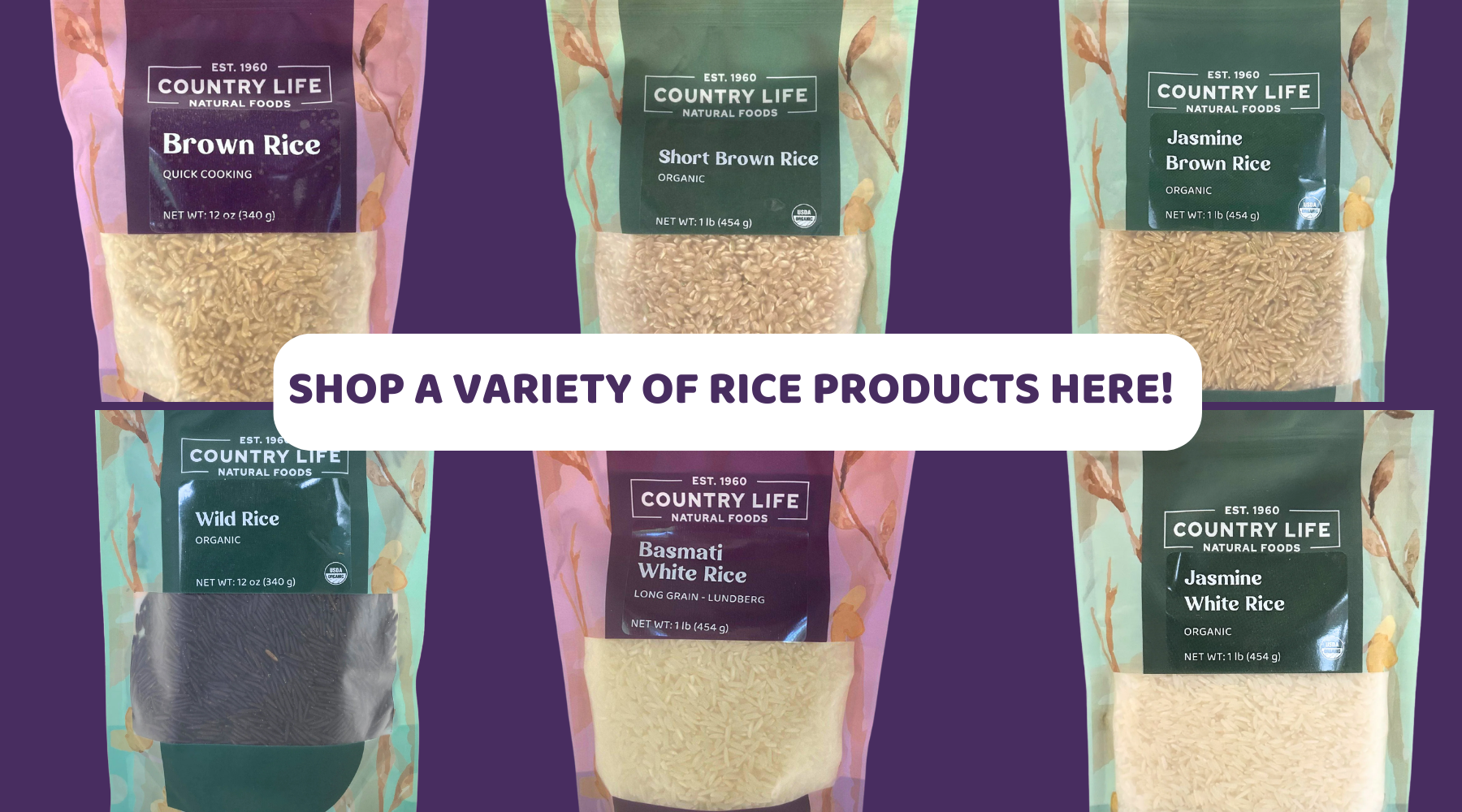
Stock up on organic white jasmine rice
Brown Jasmine Rice
- Firmer, chewier texture
- Slightly nutty flavor
- Less sticky than white jasmine
- Takes longer to cook
It still carries that subtle jasmine aroma, but with more substance. It doesn’t melt into a dish the same way but holds its shape more.
basmati rice: white & brown
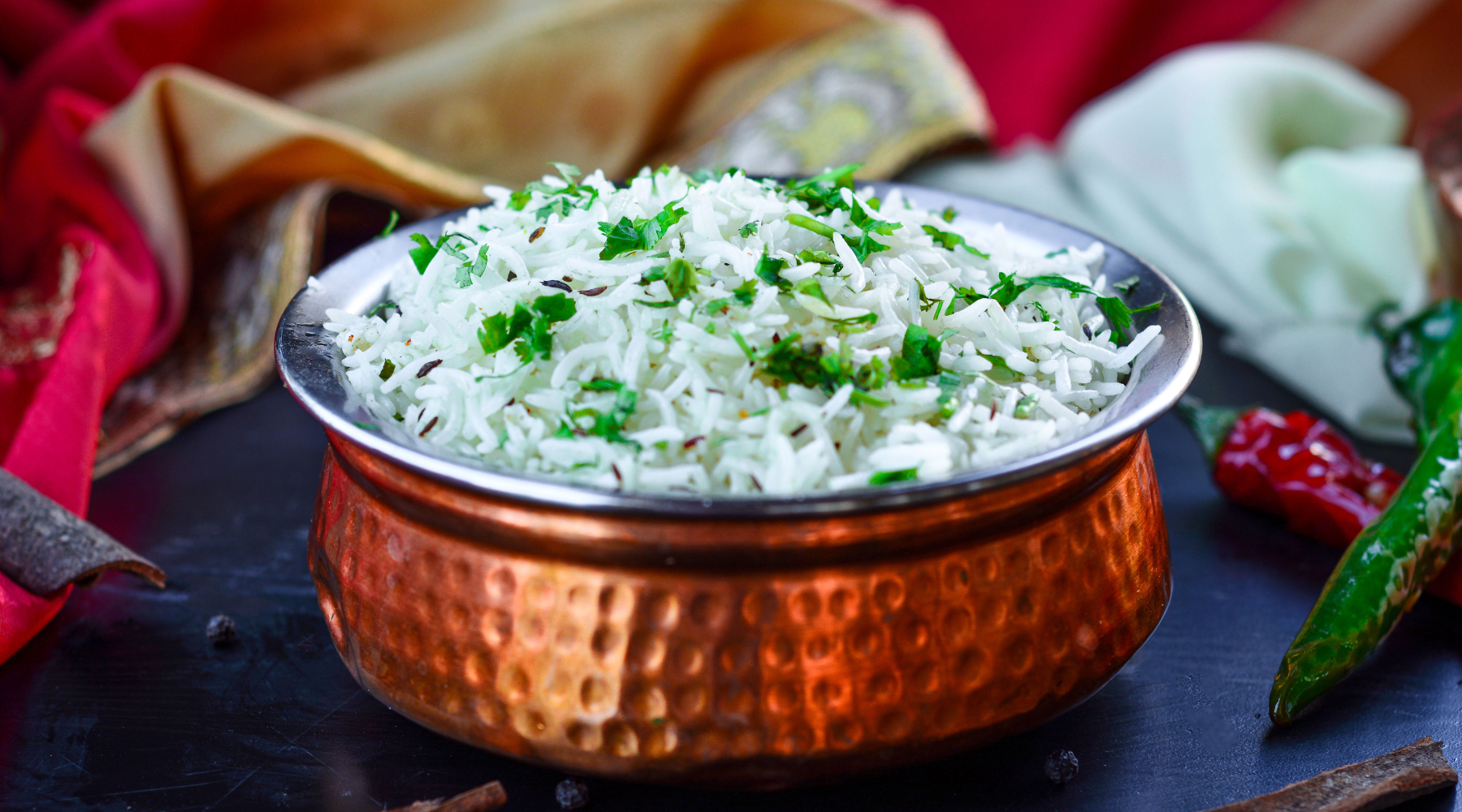
Basmati rice cooks up light, dry, and distinct. Each grain stays separate, creating a more structured, airy texture.
Its aroma is slightly nutty and more pronounced than jasmine, especially when rinsed well and cooked properly.
White Basmati Rice
- Light, fluffy, and separate.
- Long, elegant grains
- Dry, airy texture
- Distinct, nutty aroma
- Ideal for layered or spiced dishes
It stays structured on the plate, which is part of its appeal.
Buy organic white basmati rice
Brown Basmati Rice
- Hearty, slightly chewy, and more robust.
- Retains its long grain shape
- Adds a deeper, nuttier flavor
- Less fluffy than white basmati
- More filling due to fiber
It still separates well but feels more substantial and grounding.
jasmine vs. basmati rice: cooking differences
Cooking method matters more than most people think, especially if you’ve ever ended up with mushy or dry rice.
Jasmine Rice
- Rinse lightly (1–2 times)
- Use 1 cup rice : 1.25 cups water
- Simmer covered for 12–15 minutes
- Rest 5–10 minutes before fluffing
Tip: Too much rinsing removes its natural softness.
Basmati Rice
- Rinse thoroughly until water runs clear
- Soak 20–30 minutes
- Use 1 cup rice : 1.5 cups water
- Simmer covered for 15 minutes
- Rest, then fluff gently
Tip: Soaking helps elongate the grains and improves texture.
when to use jasmine or basmati rice
Best uses for jasmine rice:
- Stir-fries and skillet meals
- Curries with creamy or coconut-based sauces
- Simple rice bowls with roasted vegetables
- Fried rice (especially day-old rice)
Best uses for basmati rice:
- Indian-inspired dishes like curry or dal
- Pilafs and spiced rice dishes
- Rice bowls where texture matters. Here are 5 rice bowl recipes to try!
- Meals where you want the rice to stay fluffy and separate
Which One To Buy?
Choose Jasmine (white or brown) if:
- You cook saucy or comforting meals
- You want rice that carries flavor
- You prefer a softer, cohesive texture
Choose Basmati (white or brown) if:
- You want light, separate grains
- You cook spiced or layered dishes
- You prefer a more structured plate
You don’t need to commit to just one.
Keeping both jasmine and basmati—maybe even in both white and brown forms—gives you flexibility. Some meals call for softness. Others benefit from separation. Some days you want quick and familiar. Other days, something a little more substantial.
Rice may be simple, but the version you choose quietly changes everything around it!