Ok, first, let's get the pronunciation of this superfood out of the way.... KEEN-WAH
8 REASONS TO EAT MORE QUINOA
1. IT'S GLUTEN-FREE
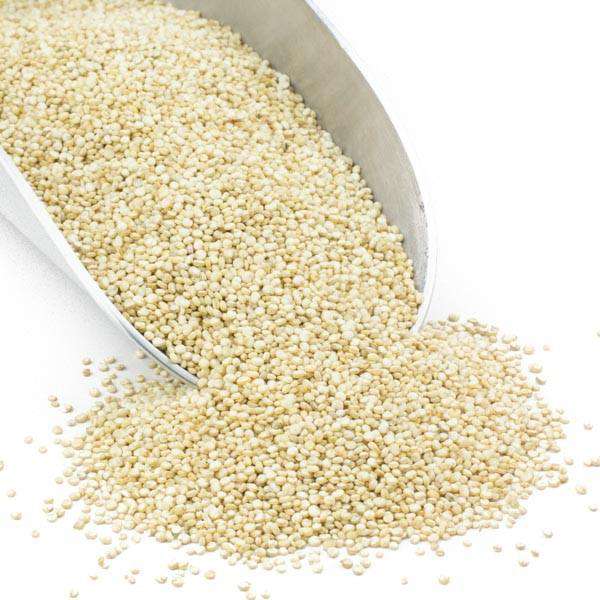
------Although it looks like and is considered a whole grain, quinoa is technically a seed, and it doesn't grow on grass as rice, wheat, and oats do.
Locals from the Andes Mountains have been cultivating it for roughly 5000 years, and there are more than 120 know varieties. But, in the grocery store, you would typically find them as white, red, or black quinoa grains.
Quinoa takes on the flavor of the dish it is cooked with, but on its own, it has a nutty flavor with a crunchy texture. Many say it tastes like brown rice, but for everyone, it differs and is quite unique...
If you have been looking for ways to eat more healthy or get in extra fiber and nutrients, continue reading to discover why you may want to consider quinoa.
2. EXCELLENT FIBER SOURCE
------3. A COMPLETE PROTEIN
------4. IT CONTAINS CRUCIAL MINERALS & VITAMINS
------MORE HEALTH BENEFITS OF QUINOA
5. HEART HEALTH
Quinoa contains Phytochemicals like nicotiflorin and rutin, and phytosterols and fiber that irrespectively lower high blood pressure and help to reduce bad cholesterol levels.
It also contains healthy fats like oleic acid and ALA (omega-3) fatty acids that can reduce the risk of heart disease. Most foods lose their healthy fatty acids when oxidized, but quinoa's nutrients hold up to boiling, simmering, and steaming.
Paired with all the essential minerals mentioned above, these compounds all contribute to a healthier heart.
6. CONTROL BLOOD SUGAR LEVELS
The high fiber content in quinoa helps to keep blood sugars stable through slower absorption into the bloodstream from the intestines. This effectively reduces the risk for developing type 2 diabetes.
7. REDUCES INFLAMMATION
Plant compounds in quinoa such as saponins, betalains, polyphenols, quercetin, and kaempferol contain antioxidant properties. These antioxidants reduce inflammation and repair cell damage caused by oxidative stress.
Antioxidants fight harmful free radicals that cause chronic diseases like cancer, diabetes, cholesterol, and heart disease. And, of course, it helps to fight the dreaded "aging" ;-)
8. MAY HELP WITH WEIGHT-LOSS
The fiber and protein content in quinoa can promote a feeling of fullness, making you snack less in between meals.
Quinoa is also a low-glycemic-index carbohydrate. This means it takes the body longer to break down than high-GI foods and raises blood sugar levels more slowly than moderate- or high-GI foods.
Just be careful; at 222 calories per cup, it is still a calorie-dense food and needs to be enjoyed in the correct serving portion.